



Swiss Single Family Offices: New Study Reveals Surprising Insights
In June 2024, the Swiss Single Family Office Association (SFOA) published its first industry study. The second edition has now been released, once again commissioned by the industry association and UBS and conducted by the University of St. Gallen.
While the first study focused on compensation and incentive structures for C-suite executives at Swiss single family offices (SFOs), the new report examines succession planning, venture capital investments, and diversification strategies, among other topics.
Significantly Higher Assets Under Management
The survey was conducted between November 11 and December 17, 2025. Of the 279 Swiss single family offices invited to participate, 82 responded. As a result, approximately 27 percent of the estimated 300 Swiss single family offices were represented in the survey, compared with 25 percent in the first study.
The participating SFOs collectively manage approximately CHF 785 billion in assets. This represents more than 90 percent of Switzerland’s gross domestic product and is roughly 30 percent higher than two years ago. The increase is primarily attributable to strong financial market performance and the growing number of single family offices.
Most SFOs hold stakes in family-owned businesses that support more than 100,000 jobs worldwide. Extrapolated across all Swiss single family offices, these investments could support approximately 650,000 jobs globally.
Key findings of the second study:
1. Strong Geographic Concentration
The Swiss single family office landscape is geographically diverse but highly concentrated in a small number of locations. The participating SFOs are spread across 16 cantons and all four Swiss language regions. However, more than half (54 percent) are located in the cantons of Zurich and Zug.
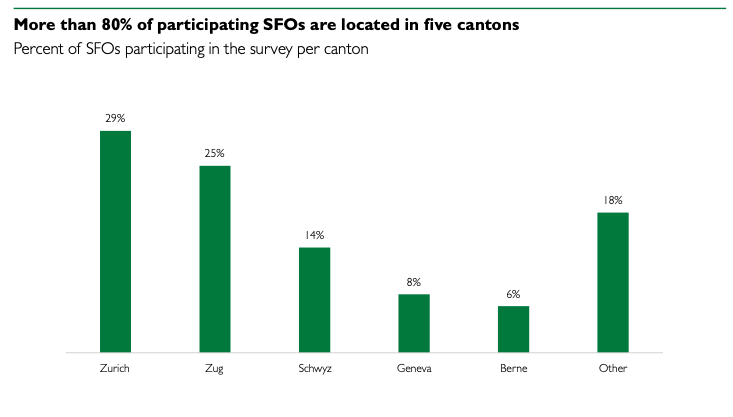
Looking at the five most important hubs — Zurich, Zug, Schwyz, Geneva, and Vaud — a total of 82 percent of all participating single family offices are based in these locations. This underscores the central importance of these financial and economic centers for Switzerland’s SFO industry.
2. Diversification Beyond National Borders
A total of 88 percent of family offices hold assets in at least two to four countries. The primary motivations are wealth preservation, legal certainty, and geopolitical diversification.
International structures and multi-jurisdictional footprints are increasingly becoming the norm.
3. Venture Capital Remains Attractive, but Switzerland Benefits Only Marginally
Single family offices play an important role in the venture capital ecosystem. These investments are primarily made through direct investments and venture capital funds.
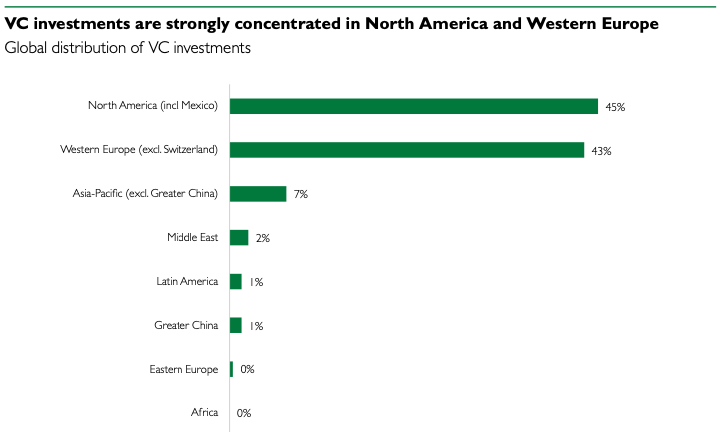
However, only 29 percent of venture capital investments are allocated to Switzerland. The remaining 71 percent are invested abroad, primarily in the United States, followed by Western Europe and Asia (excluding China).
The most important prerequisites for increasing venture capital allocations are trusted co-investment partners (29 percent) and stronger exchanges with other family offices (24 percent).
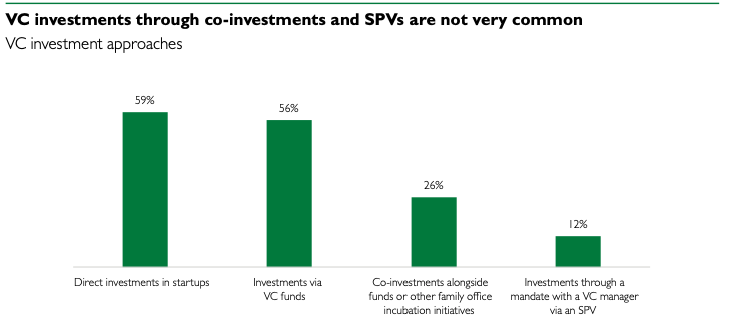
Family offices active in venture capital favor direct investments (59 percent) and VC funds (56 percent). Co-investments account for 26 percent, while special purpose vehicles (SPVs) play a significantly smaller role at 12 percent.
4. Succession Planning Has Become the Top Priority
Preparing the next generation has become more important for many family offices than achieving short-term investment performance. Approximately 60 percent of next-generation family members are already actively involved in wealth management and strategic decision-making.
The age group between 18 and 29 is considered particularly important for financial education and initial responsibilities. Formal decision-making authority is generally transferred only from around age 30 onward.
Most Swiss single family offices currently oversee wealth belonging to the first generation (47 percent) and second generation (51 percent). Overall, 69 percent focus on the first generation, second generation, or both. Only 28 percent have reached the fourth generation or beyond.
This suggests that Switzerland’s SFO sector remains relatively young and is approaching a critical succession phase, particularly during the transition from the second to the third generation.
As SFOA President Kurt Moosmann emphasized during an event on Tuesday evening, family offices are increasingly addressing the psychological challenges faced by wealth inheritors. Many heirs perceive substantial wealth not only as a privilege but also as a burden.
Topics such as depression, purpose, and mental well-being are therefore expected to receive greater attention in the future.
In 65 percent of Swiss single family offices, family members remain actively involved in governance and oversight. Typically, one or two family members participate directly, with an average of 2.5 family members engaged per SFO. By contrast, around 35 percent of family offices are managed entirely by external professional management teams.
5. Inheritance Tax Initiative Triggered Major Concerns
The vote on the Young Socialists’ inheritance tax initiative in November last year generated considerable concern among wealthy families. Assets exceeding CHF 390 billion would have been affected by the proposal.
The study reveals that before the vote, 53 percent of surveyed family offices considered relocating outside Switzerland:
- 5 percent ultimately decided to leave Switzerland;
- 15 percent developed concrete relocation plans;
- 33 percent seriously evaluated the possibility.
The findings highlight the continued importance of tax conditions and location attractiveness for wealthy families and demonstrate the high mobility of large private fortunes.
World’s First Code of Conduct Planned
In addition to presenting the study results, the SFOA announced on Tuesday evening that it plans to publish a dedicated Code of Conduct for single family offices. The launch is scheduled for the end of the third quarter.
The code has been developed by members of the Swiss Single Family Office Association.
Its objectives include stronger governance standards, greater transparency, increased professionalization, and enhanced credibility with authorities—particularly regulators—as well as business partners.
With this initiative, Switzerland could establish an international benchmark for the single family office industry.


