


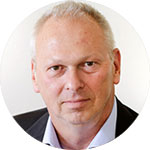
Sven Holstenson: "Technology is Becoming The Decisive Success Factor"
By Jérôme Sicard
With fully organic growth that lifted assets under management and custody to more than 800 billion francs in 2026, Pictet is pursuing a model geared toward long-term development.
In this interview, Sven Holstenson outlines the group’s strategic priorities through 2030: accelerating in private assets, expanding in Asia, transforming technologically, and further developing its own service offering. At the same time, he analyzes the current changes in wealth management, from the growing importance of artificial intelligence to the professionalization of family offices and the rising significance of independent wealth managers.
Assets under management of 437 billion francs in 2015, 810 billion as of June 30, 2026: The Pictet Group has almost doubled in size over ten years. What were the main drivers of this growth?
What is interesting is that this growth is mainly based on moderate but sustainable development. Over ten years, we have grown by 6 to 7 percent annually. In the short term, that may not sound spectacular, but over time this steady development has enabled us to double our size within a decade.
"For 221 years, Pictet has evolved without acquisitions. That has allowed us to preserve our values."
This growth has affected all business areas. Pictet Asset Management has made a significant contribution to this development thanks to the success of its thematic investment strategies.
Pictet Wealth Management has recorded healthy growth, especially in Asia, a strategic market for us where we have been present for almost twenty years. Pictet Asset Services has also developed strongly in recent years, driven by institutional clients and independent wealth managers looking for robust infrastructure and partners that can meet increasingly complex requirements.
It is important to emphasize that this growth has been entirely organic. That is a crucial point. For 221 years, Pictet has evolved without acquisitions. This approach has allowed us to preserve our values and our corporate culture. Of course, we have growth ambitions, including in German-speaking Switzerland, which is a promising market for us. However, this expansion is in line with our organic approach.
Which changes have shaped Pictet most strongly over the past ten years in terms of model, culture, or positioning?
First, I would like to highlight the two aspects that have not changed: our culture and our partnership model have remained unchanged, and we are extremely proud of that. Our organic growth allows us to preserve a very strong corporate culture despite generational change and geographical expansion. When you grow through acquisitions, you have to integrate clients, systems, and employees that you did not choose yourself. That challenge does not arise for us.
To return to your question: the most important change is probably the importance technology has taken on within the group. Today, we employ more than 1,000 engineers out of a total workforce of around 5,600. Almost 20 percent of our staff work in IT functions. We have always said that we are an "investment-led service company." Today, we are an "investment-led service company powered by technology."
What strategic direction do you want to give the bank over the next ten years?
We work with strategic five-year cycles that we call "Ambitions." We have just completed Ambitions 2025 and are now beginning Ambitions 2030, very much in the spirit of continuity.
The first strategic focus is private assets. Pictet has been among the first European investors in this asset class since the 1980s. We want to further expand our commitment to private equity and real estate, as wealthy investors increasingly raise their allocations in these areas.
The second focus remains Asia, where an important shift is taking place: Asia is no longer just a source of capital. The region has also become a destination market for our clients’ investments.
The third focus is technology. We have an integrated and unified IT architecture, without the complexity of historically grown systems from earlier acquisitions. This is an important advantage that allows us to concentrate on innovations that benefit our clients and employees.
Finally, the fourth focus is geographical proximity to our clients. We want to further expand our presence in Europe, the Middle East, and other strategic regions in order to support our clients as closely as possible in their private and professional centers of life.
Let us stay with technology: Will AI and digitalization fundamentally change wealth management, or will they merely remain tools for increasing efficiency?
We are convinced that the human relationship will remain a fundamental part of wealth management. The trust relationship between client and wealth manager will not disappear. In an increasingly digitalized world, it may even become more valuable.
At the same time, technology will profoundly change the way we work. We are investing heavily in artificial intelligence and have developed our own AI agents. Today, they are mainly used to optimize and automate processes in document management, regulatory analysis, and data processing.
"We are seeing increasing multipolarization in global wealth management."
For example, we have worked extensively on KYC processes for independent wealth managers. Artificial intelligence can now interpret questionnaires, identify inconsistencies, detect missing information, and make the entire process between client, wealth manager, and bank more efficient. The next step will probably be the use of agents that can communicate with one another and thus redesign entire operational process chains.
There is no doubt that in 2030 or 2035, it will be difficult to interact with clients without an extremely powerful technological platform.
How do you assess the global wealth management industry today, in the tension between risks and opportunities?
We are seeing increasing multipolarization in global wealth management. For a long time, Switzerland held a dominant position in cross-border business. Today, new strong financial centers are emerging, such as Hong Kong, Singapore, and Dubai.
I do not see this as a threat to the Swiss financial center. Rather, this development reflects the increasing internationalization of wealth. The time when a client could keep their bank 2,000 kilometers away from their place of residence is probably over. Expectations today are more focused on proximity, whether for regulatory, cultural, or simply personal reasons.
Nevertheless, Switzerland remains a leading financial center and has unique strengths such as its know-how as well as its political and economic stability.
Pictet is one of the last major private banks with a partnership board. Does this model still have advantages in a world shaped by listed groups and ROE pressure?
It is a significant advantage. And at the same time, a great opportunity for our employees, our clients, and our entire ecosystem. The partnership structure allows us to act with a long-term perspective. We are not under the constant pressure of short-term quarterly results and can focus on ensuring client satisfaction.
This model has proven itself over more than two centuries. It has clearly enabled us to weather major crises without compromising our stability and independence.
In addition, there is very strong alignment of interests. It is a matter of "skin in the game," to use the Anglo-Saxon term. The partners invest in the same assets as their clients and therefore bear the same risks. On average, partners remain in office for around twenty years, which creates an exceptional level of responsibility and continuity.
We are willing to further develop many things at Pictet, but certainly not our governance model.
When you became a partner: What did you want to contribute to Pictet’s further development?
One must remain very humble in this role. I am the 46th managing partner of the bank. Many came before me, and many more will follow. We are therefore only links in a long chain.
"The real challenge in the years ahead will be mastering technological complexity."
It is true that my training as an engineer probably gives me a special responsibility in the technological transformation the group is currently undergoing.
What surprises you most today about the evolution of the private banker profession?
The profession is now much broader than it was twenty years ago. We no longer limit ourselves to pure wealth management. Clients today expect holistic support that covers private investments as well as succession planning, governance, philanthropy, international structuring, tax issues, and entrepreneurial topics.
At the same time, technology has become indispensable. It does not replace the human relationship, but it fundamentally changes the way we serve our clients.
The real challenge in the years ahead will be to master this technological complexity without diluting what gives our profession its value: quality and personal relationships.
Are independent wealth managers becoming a credible alternative to private banks?
They always have been. And they will remain so. Ultimately, we do the same job, but in complementary ways. Some clients feel more comfortable at a large private bank, others with an independent wealth manager, and many will work with both models.
With the Registered Investment Adviser model, the United States is probably somewhat ahead of Europe. We will likely move in a similar direction in Switzerland, with independent players becoming increasingly institutionalized and professionalized.
However, this development also requires significant investment in technology, especially in cybersecurity. Independent wealth managers will therefore need strong partners who can support them with infrastructure and security issues.
"We are observing a clear professionalization of the family office business."
How do you assess the transformation of family offices in recent years, both in terms of their structure and their ambitions?
We are observing a clear professionalization of the family office business. Family offices today are more structured, more regulated, more technologically sophisticated, and more institutionally oriented than they were ten or fifteen years ago.
This development also reflects the increasing complexity of large fortunes. Ultra-high-net-worth clients now expect more comprehensive solutions, from wealth structuring and portfolio management to family governance, philanthropy, and international tax planning.
How is the Pictet Group adapting its model to meet these requirements?
Family offices expect us to mobilize all the necessary expertise around their assets without having to navigate the group’s organization themselves. At Pictet, we have worked intensively in recent years to build a true integrated platform for this client group, with a single access point to our entire offering: our solutions in custody services, reporting, management of private and liquid assets, and structuring through Luxembourg funds or L-QIF.
This development is consistent with the group’s international transformation. Today, we have 31 locations worldwide to further strengthen proximity to our clients.
Sven Holstenson has been a managing partner of the Pictet Group since 2023. He is responsible for Pictet Asset Services, Pictet Tech, Operations, and Group Corporate Services. He also chairs the Executive Committee of Banque Pictet & Cie and the Board of Directors of Bank Pictet & Cie (Europe).
Before being appointed partner, Sven Holstenson was responsible for Europe at Pictet Wealth Management. Before joining Pictet in 2012, he worked as a management consultant at McKinsey & Co.
This article was produced in collaboration with SPHERE


