


Why Switzerland Is Facing a Major Opportunity
Some investment themes emerge from market analysis. Others are born of personal turning points.
When Sarah de Lagarde woke up in hospital after a serious accident, she had lost her right leg and her right arm. What followed was not only a long journey back to everyday life, but also an intensive engagement with the possibilities of modern medical technology.

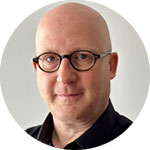
Sarah de Lagarde. (Image: Courtesy)
Today, the Brighter Future Strategist at asset manager Janus Henderson wears an advanced bionic arm prosthesis that uses artificial intelligence to recognize movement patterns and continuously learn. The experience fundamentally changed how she views health, financial planning and investing.
«Health is our greatest asset. But most people only realize that once they lose it», de Lagarde said during a meeting with finews in Zurich.
From that realization, she developed the concept of «Wealth for Health». The idea is to treat health not as a given, but as a core component of long-term financial planning.
Health as a New Savings Goal
Most people save for retirement, home ownership or their children’s education. Their own health, by contrast, often plays only a secondary role in long-term financial planning, according to de Lagarde.
Yet the risks are clear: an aging society, rising healthcare costs and increasingly overstretched public health systems could make access to modern therapies and treatments more difficult.
«Anyone who wants access to the latest medical innovations often has to pay for them themselves.»
De Lagarde knows this reality from personal experience. After her accident, her husband researched the latest bionic prostheses. The most advanced version cost about £250,000 – significantly more than insurers typically cover.
«Insurance companies often pay for the cheapest solution. Anyone who wants access to the latest medical innovations often has to pay for them themselves», she said.
Modern prostheses are also not a one-off purchase. Components need to be replaced, repaired or technologically upgraded on a regular basis. In her view, healthcare spending will therefore take on a much larger role in private wealth planning.
Investing in One’s Own Future
For de Lagarde, the concept of «Wealth for Health» goes one step further.
Anyone saving for the future can also allocate capital to the companies developing medical innovation. Healthcare and technology companies need funding for research, development and approval processes.
«It is a win-win situation. Investors finance innovations from which they may one day benefit themselves.»
Janus Henderson believes the convergence of healthcare, biotechnology and technology represents one of the most compelling long-term investment opportunities, and has continued to expand its capabilities across these areas to help investors access that growth.
The combination of healthcare and technology, in particular, opens up attractive long-term growth opportunities.
The Future lies at the Intersection of Medicine And Technology
For de Lagarde, one thing is clear: the healthcare sector will not be able to solve its challenges without technology.
The aging population is driving rising demand for healthcare services around the world. At the same time, many countries face shortages of doctors, nurses and other skilled professionals.
Artificial intelligence can make a decisive contribution here. «Healthcare and technology are no longer separate worlds. The future lies in combining the two», she said.
Potential applications range from automating administrative tasks and AI-supported diagnostics to robot-assisted surgery.
«All the ingredients are already there. Switzerland has the potential to take an absolute leadership role.»
A radiologist, for example, can use artificial intelligence to detect tumors that are barely visible to the human eye. Surgeons are supported by robotics during complex procedures. Nursing staff can be relieved by automated systems.
According to de Lagarde, this leaves more time for genuine human contact with patients: «Technology should not replace people, but support them.»
Switzerland has All the Ingredients For a Leadership Role
De Lagarde sees particularly strong potential in Switzerland. The country already has a world-leading healthcare industry, renowned research institutions and substantial capital resources. It also has a strong capacity for technological innovation.
«All the ingredients are already there. Switzerland has the potential to take an absolute leadership role in this field», she said.
The key will be to systematically combine the traditional strengths of the healthcare sector with artificial intelligence, robotics and digital technologies.
«The winners will be those that combine healthcare expertise with AI, robotics and technology partnerships.»
Given that demand for healthcare services is likely to rise sharply in the coming decades, she sees significant economic opportunities.
Innovation Needs Capital – and Patience
Despite the promising outlook, de Lagarde points to one central challenge.
Many innovative biotech companies already have promising solutions. The real bottleneck often lies in regulatory processes.
«The data must belong to the patient, not to the companies.»
New therapies must go through extensive trials and receive numerous approvals. This process can take years and tie up substantial financial resources.
This is where she also sees an important role for active asset managers. Specialized fund managers are better placed to assess which companies have the strongest prospects of successfully clearing regulatory hurdles.
AI Needs Clear Guardrails
As great as the opportunities created by technology may be, its regulation is equally important.
De Lagarde’s bionic prosthesis continuously collects data on movement patterns and uses artificial intelligence to keep improving its functions.
That raises questions around data protection, data ownership and security. «The data must belong to the patient, not to the companies», she said.
In addition to traditional approval procedures in healthcare, clear rules for AI applications are therefore needed.
Who owns the data? How is it stored? How secure is it against misuse? These questions have not yet been sufficiently answered. «We cannot stop technological development. But we can ensure that it is used responsibly», de Lagarde said.
Women’s Health as an Underestimated Growth Opportunity
De Lagarde is particularly critical of the way women’s health has been treated. Many medical studies and treatment approaches are still primarily based on male patients. Conditions such as endometriosis, menopause and women-specific health issues have been neglected for decades.
«From a commercial perspective, it makes no sense to ignore 50 percent of the population», she said.
«We can no longer stop AI. That is why we should promote its positive applications.»
The executive is deliberately not only talking about equality, but also about economic potential: «There are enormous investment opportunities here. The market is huge and, at the same time, heavily underserved.»
For investors, this area could become one of the most interesting growth fields in the years ahead.
Education and Awareness as the Key
In the end, de Lagarde believes there is no way around a broader public debate.
People need to engage more deeply with the implications of an aging population. At the same time, more education is needed about the opportunities and risks of new technologies.
«We can no longer stop AI. That is why we should promote its positive applications while setting guardrails to limit the negative consequences», she said.
For Switzerland, this creates a particular opportunity. The country combines medical excellence, technological innovation and capital like few other locations.
If it succeeds in bringing these strengths together more systematically, the next major healthcare revolution could indeed begin here.


