



Pension funds with slightly positive performance in October
Swiss pension funds posted an average return of 0.41 percent in October. This is according to the latest study on UBS's pension fund performance.
Results varied significantly from one fund to another: Performance ranged from minus 1.17 percent to plus 2.01 percent. Since the start of the year, the average return has been 4.91 percent. Since the launch of UBS pension fund performance in 2006, the annualized return has been 3.42 percent.
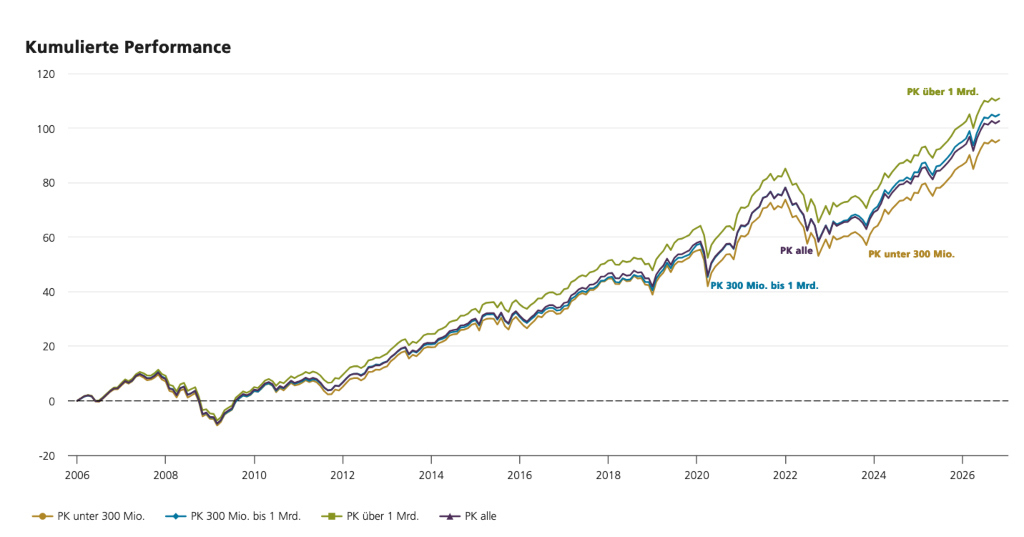
(Chart: UBS)
Smaller pension funds performed better in October than larger ones. Institutions with assets under management of less than 300 million francs achieved a median performance of 0.47 percent. For pension funds with more than 1 billion francs in assets, the median was 0.34 percent.
The risk-return ratio also improved. The average Sharpe ratio over the past 36 months rose from 1.63 in the previous month to 1.92.
Swiss equities significantly in the black
Among the individual asset classes, October painted a mixed picture. Swiss equities performed particularly strongly, gaining 6.01 percent. Bonds in Swiss francs rose by 0.8 percent, while direct real estate investments gained 0.35 percent and foreign currency bonds rose 0.16 percent. Indirect real estate investments returned 0.14 percent.
Alternative investments and global equities performed markedly worse. Hedge funds lost 1.06 percent, infrastructure investments 1.23 percent and private equity 1.47 percent. Global equities recorded the steepest decline among the asset classes covered, falling 2.84 percent.
Interest rates and geopolitics shape the markets
In October, financial markets were driven by tensions in the Middle East, persistent inflation and robust economic growth, which pushed up energy prices and bond yields, UBS economists wrote. After the major central banks left their policy rates unchanged, prices and yields partially eased again.
Toward the end of the month, the technology sector in particular came under pressure. Higher financing costs and doubts about the investment cycle around artificial intelligence triggered a sell-off. According to UBS, gains in the broader stock market were nevertheless still supported by robust consumer demand and an improving industrial backdrop.
Rising industrial production
UBS remains broadly optimistic for the coming months. The Chief Investment Office (CIO) expects robust corporate earnings, supported by investments in artificial intelligence, resilient US consumer demand and rising industrial production. This should support equities in the US, the eurozone and key Asian markets.
At the same time, UBS warns of risks stemming from geopolitical tensions and possible effects on energy prices. Overall, however, economies remain resilient. On geopolitical grounds alone, the CIO therefore sees no reason for a more defensive stance and instead favors a broad commodity allocation as a hedge within a diversified portfolio.


