


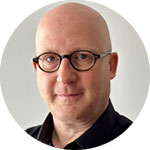
Erik Hirsch: “This Market Concentration Is Not Sustainable”
Beyond AI, where do you see particularly significant investment opportunities?
Defense is a major area. The amount of capital flowing globally into innovative military solutions is already rising dramatically and will continue to increase.
The past few years have shown that the traditional military-industrial model is changing. Today, I am less interested simply in how many tanks an army has. I want to know how many drones it has, what its long-range missile capabilities are and what it is doing in space defense.
“We Are Now Realizing That Modern Warfare Can Look Very Different.”
Countries will also want to control more of their own supply chains or develop very close partnerships with allies. Relying heavily on other countries for critical military capabilities increasingly looks like a thing of the past.
Much of the innovation in areas such as drones, robotics and autonomous systems is being funded by venture capital. Military organizations can let entrepreneurial companies develop these technologies and then buy the solutions that prove successful.
Are we really witnessing such a fundamental transformation in defense?
Yes. Everything is changing.
Take the US military. It has traditionally been built around very large systems – aircraft carriers, Abrams tanks, Black Hawk helicopters, Apache helicopters and F-35s.

Erik Hirsch: "I think it would be odd to say that public equity markets should be open to everybody while private markets should only be accessible to a small group." (Image: courtesy)
We are now realizing that modern warfare can look very different. Ukraine has innovated and adapted incredibly quickly. Some of the technologies being deployed today did not exist a few years ago, or in some cases even a few months ago.
A huge amount of military infrastructure around the world was built around a very different model of warfare. Rethinking and retooling that infrastructure will require enormous amounts of capital.
Private markets are increasingly being opened to individual investors. Is that a problem?
No. I actually think it would be odd to say that public equity markets should be open to everybody while private markets should only be accessible to a small group.
Institutional and individual investors have coexisted in the stock market for a very long time. They are going to coexist in private markets as well.
But private markets are illiquid. Isn't that particularly problematic for individual investors?
To me, the real problem is not illiquidity. It is education.
Investors need to understand what they are buying and whether it is appropriate for them. Those of us providing these investments owe investors complete transparency about what private markets are, what they are not, how they work and how they do not work.
“Ten Companies Account for About 40 Percent. The Concentration Is Not Sustainable.””
If we provide that level of transparency and education, and investors are capable of deciding whether an investment is right for them, then private markets absolutely have a place.
Why should individual investors have exposure to private markets in the first place?
Because private markets represent a huge part of the economy. Ignoring them means deciding to invest in only one part of the economy.
There is also an extraordinary degree of concentration in public markets. The ten largest companies in the S&P 500 account for roughly 40 percent of total market capitalization.
To find numbers approaching that level, you have to go back to the late 1960s or early 1970s. But back then, the largest companies were in very different industries. Today, it is heavily concentrated in technology, and some of these companies are customers and suppliers to one another.
So you have both very high concentration and high correlation. Private markets can provide additional diversification.
Will private markets eventually become more important than public markets?
No. They are still much smaller.
If you took all the capital private markets will raise this year and levered it, you could not buy Nvidia. That puts the scale into perspective.
Private markets are growing, but relative to public markets they are still very small.
Yet you believe today's concentration in public equity markets is problematic?
Absolutely. Roughly 40 percent of the S&P 500 is concentrated in ten companies.
Put simply, 490 companies have not experienced the same kind of stock performance, while ten have performed extraordinarily well and are pulling the broader index with them.
I do not think that concentration is sustainable.
What needs to happen for that to change?
It will come down to how quickly AI business models can be monetized. Revenue needs to continue rising, while costs need to come down.
The revenue growth being reported by the large LLM providers is impressive. But in some cases, they are still spending multiples of the revenue they generate per customer or interaction.
“The Fact That I Am Here Tells You How Important Switzerland Is For Us.”
I am not the smartest guy in the world, but generally speaking, if you charge one franc for something that costs you four francs to provide, that is not a great sustainable long-term business.
That model needs to change.
How important is Switzerland for Hamilton Lane?
The fact that I am here to speak at an investment conference tells you it is important.
Wealth management is a huge part of the Swiss economy, and a significant amount of capital is managed by Swiss firms. For many of them, the journey into private markets is only beginning.
We want to be one of their key partners. That is why we are present here and have people based in the market. Switzerland remains an important market for us.
What are your ambitions in Switzerland?
We want to be seen as a trusted solutions provider for investors seeking access to private markets.
Hamilton Lane has around 35 years of experience helping investors do that successfully. We want to bring that expertise to investors around the world, and Switzerland is an important part of that strategy.
Will Hamilton Lane expand its team in Switzerland?
We opened our local office more than four years ago and have a very talented team here today, which we hope to continue growing. If everyone comes here on a beautiful day like today and sees Switzerland, everybody is going to want to move here.
- << Back
- Page 2 of 2


